
Microbes and immunity: how tolerance is taught, not born
The immune system is not built to eliminate microbes; it is built to live with them. Bacteria on the gut lining teach immune cells — macrophages, regulatory T cells — which signals mean danger and which mean neighbour. That learning, called tolerance, starts at birth. When it fails, the result is chronic inflammation rather than infection.
 Written by: Magnus Larsen · Microbiologist · Science bloggerPublished: Facts checked:

What this system is
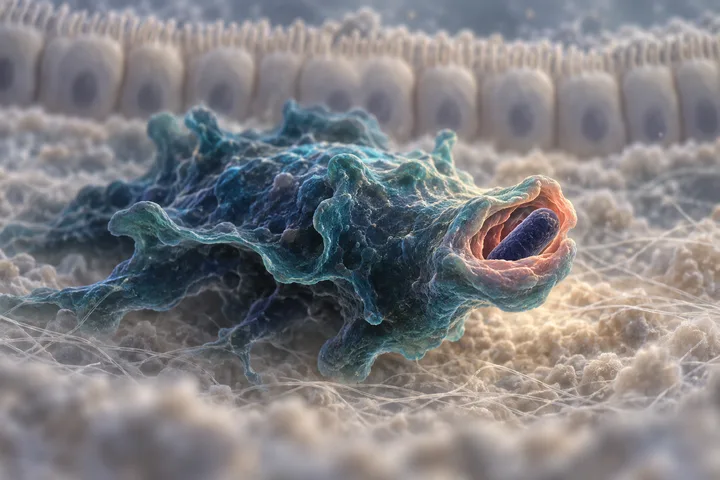
The largest immune organ in the body is the gut lining, and it is a single cell thick. On one side, a dense population of microbes; on the other, the body. Macrophages patrol that border. They swallow what crosses, and they decide — through the receptors on their surface — whether to sound an alarm or to stay quiet. Bacterial molecules such as short-chain fatty acids nudge them toward quiet; some cell-wall fragments push toward alarm.
Tolerance is the result of that constant negotiation. Regulatory T cells, many of them induced by specific gut bacteria, hold the peace. Germ-free animals show what happens without teachers: underdeveloped immune tissue, poor tolerance to food, exaggerated allergic responses.
The three questions people ask
Do probiotics boost immunity? "Boost" is the wrong verb. A healthy immune system is calibrated, not maximal. Some strains change immune markers in trials; whether that translates into fewer infections is strain-specific and modest where it has been shown.
Is inflammation caused by bacteria? Inflammation is the immune system's normal response. Chronic, low-grade inflammation is associated with a leaky gut barrier, a fibre-poor diet and shifts in the microbial community — but the arrow of causation runs both ways.
Can I fix allergies or autoimmunity through the gut? Early-life exposure matters: farm children, pets and older siblings track with fewer allergies. For adults with established autoimmune disease, microbiome-based treatment is experimental.
What the science can and cannot say yet
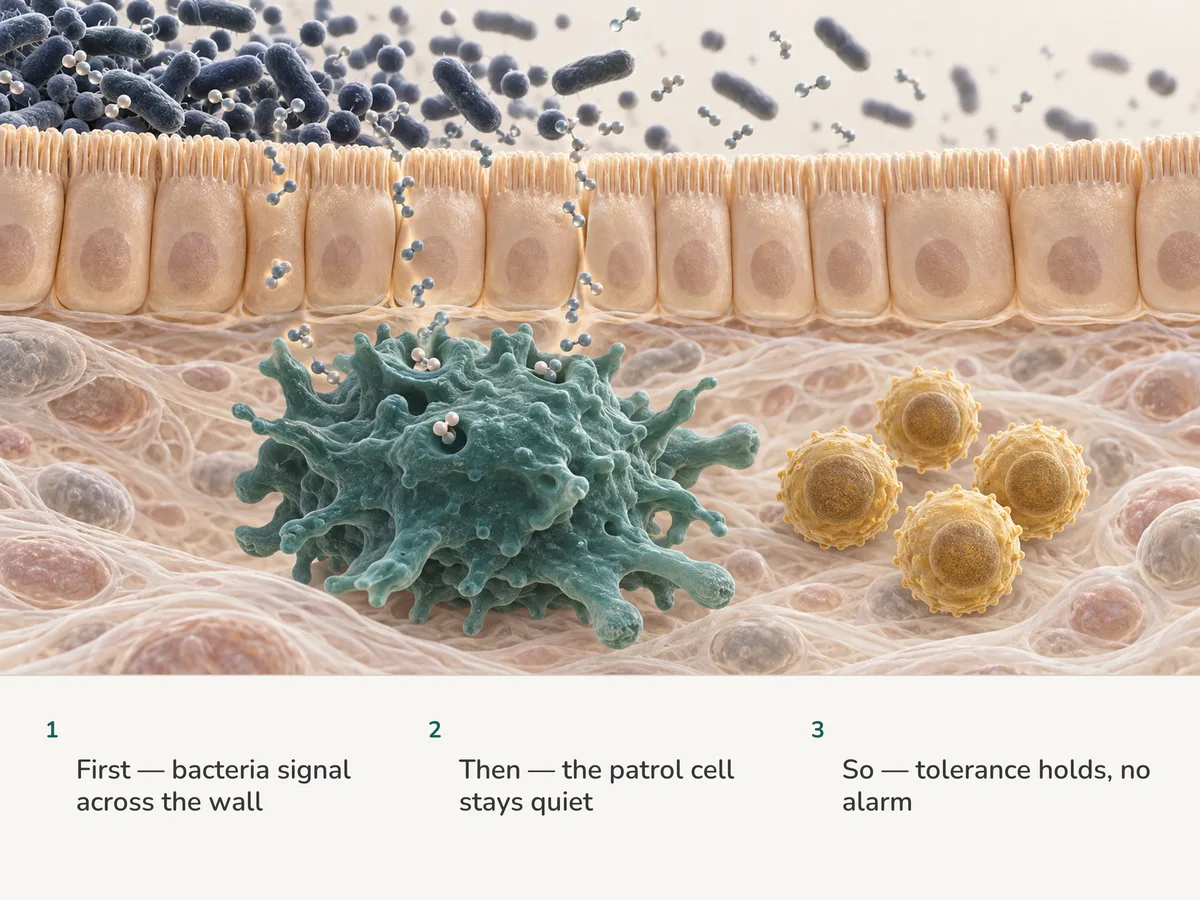
It can say: gut bacteria are necessary for a normally developed immune system; specific species induce regulatory T cells; macrophages read bacterial metabolites; tolerance is learned early.
It cannot yet say: which bacteria a given person is missing, whether adding them later restores tolerance, or whether measuring a cytokine tells you anything about your risk. Most of the mechanism is mouse data; the human evidence is observational.
Read the encyclopedia of bacteria for the species named here, and the news list for what changed this month.
Related

Long covid may be driven from the gut, not from the lungs
A 2026 study in Gut traces inflammation far from the gut to flagellin, the protein of the bacterial swimming tail, via TLR5, IL‑15 and arachidonic acid.
Air should kill a baby's first microbe. It breathes instead
A Cell study reports one membrane fat lets Bacteroides fragilis — a microbe air should kill — outlast the oxygen of a newborn gut, and tunes immune cells.

Vitamin A doesn't reach your immune cells on its own
In mice, gut bacteria run a three-day relay that carries dietary vitamin A to immune cells. Cell Host & Microbe 2026 — and what it did not show.